Off season
The Gorge in January, When the Spray Comes Back Down as Ice
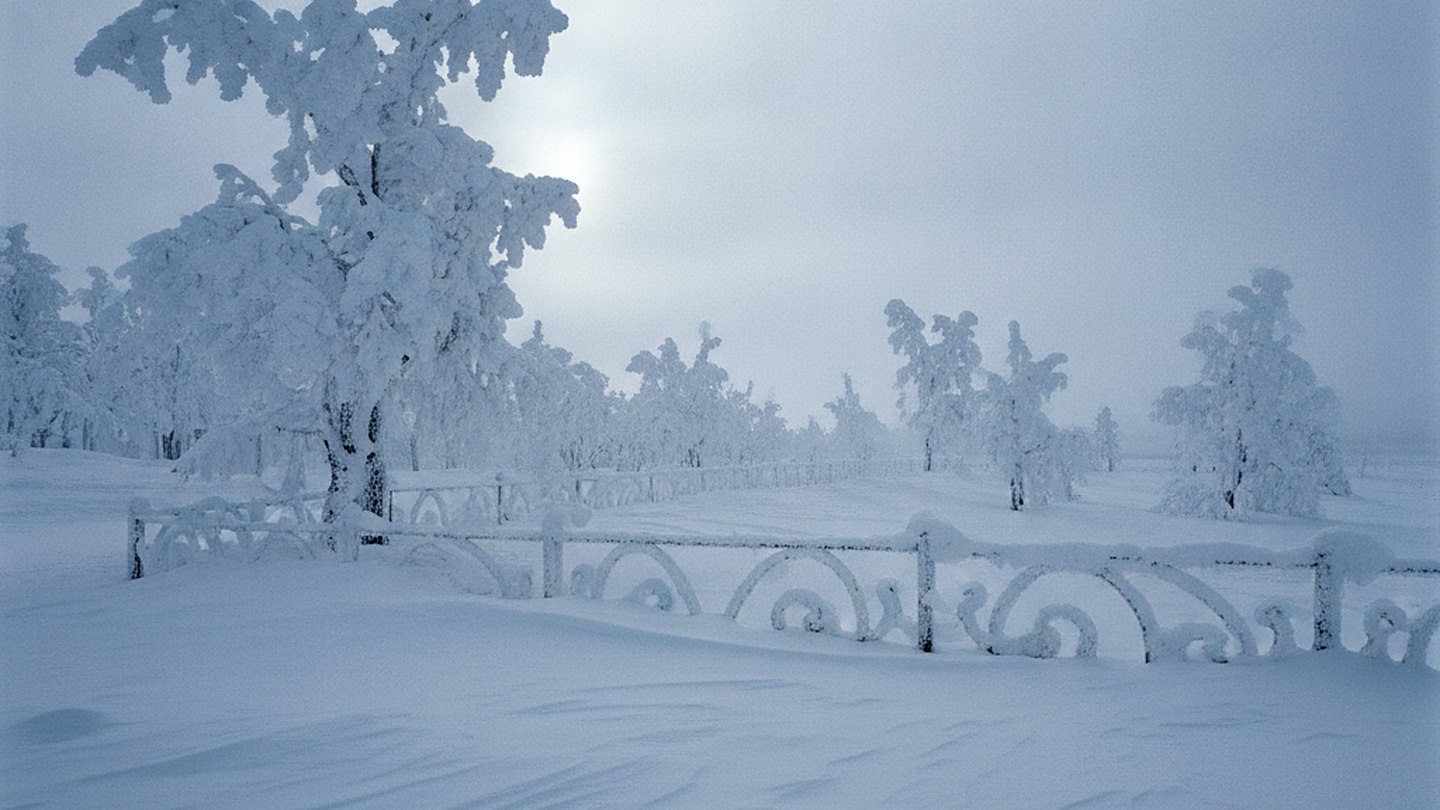
Frozen mist coats every railing, branch and lamp post along the rim until the whole gorge looks upholstered. Four days in the coldest and emptiest week of the year.
June 26, 2026 / Niagara gorge, New York / January / 9 min read
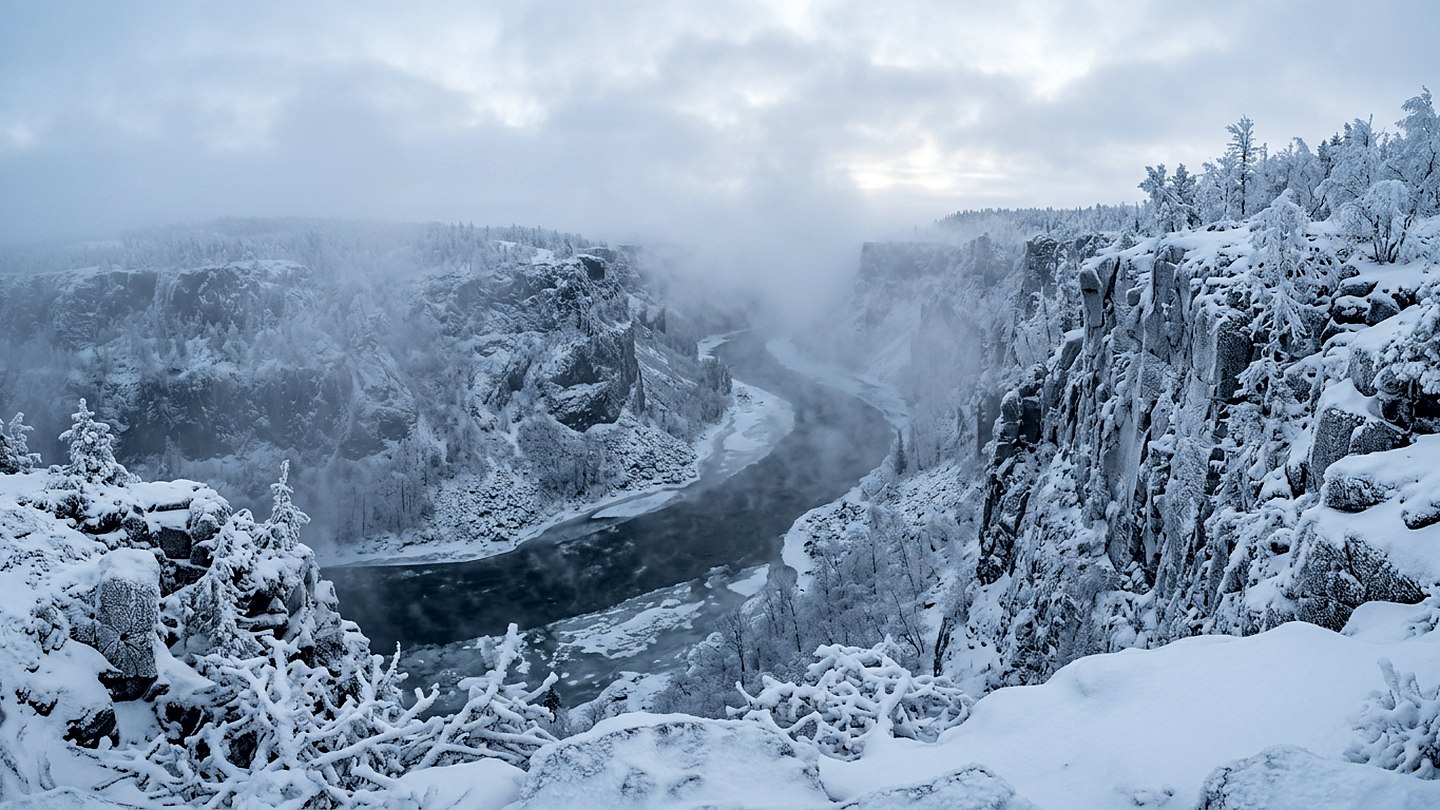
Every winter a set of photographs goes around showing this place apparently frozen solid, and every winter somebody has to point out that the river does not stop. It has never stopped. Roughly the volume of water you would expect from a Great Lakes outflow keeps going over the edge in January exactly as it does in July.
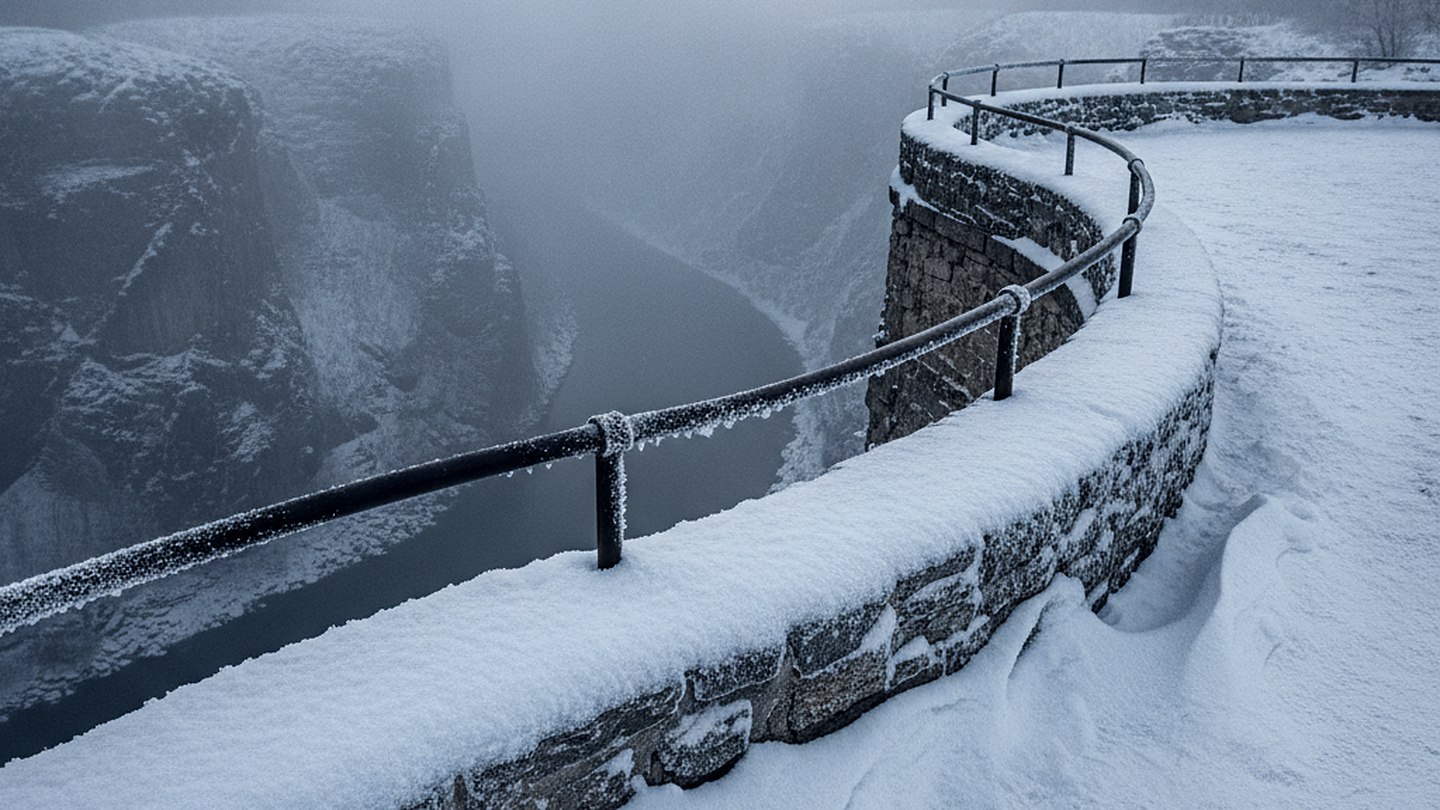
What does happen in a hard cold snap is far more interesting to look at and much harder to photograph. The falls throw an enormous amount of water into the air as mist. In deep cold that mist freezes onto whatever it lands on, and it lands on everything downwind: railings, lamp posts, benches, signs, and above all trees. The coating is called rime, it builds in layers, and after a few days of proper cold it turns the rim of the gorge into something that looks upholstered.
I gave it four days in the third week of January, which is statistically the coldest stretch of the year here and, not coincidentally, the emptiest.
01Wind decides which side is worth walking
The mist does not spread evenly. It goes where the wind takes it, which means one bank of the gorge can be encased in white while the other is merely cold and bare.
That single fact organised the whole trip. Each morning I checked the wind before deciding where to walk, and twice I changed plan at the car park. On a west northwest wind the rime built heavily on the paths and trees along the eastern rim. When the wind swung more southerly on the third day, the same trees were dripping by noon and the deep material had moved a few hundred metres north.
The build is quick. Two nights below minus ten with steady mist put roughly a hand's width of rime onto a railing, in layers you can count on a broken edge like growth rings.
02The two empty hours
The rim paths and terraces here are open all year and are quiet in January in a way they never are otherwise. Not deserted, but quiet.
The window I used every day was from opening until about ten in the morning. Two things happen in that window: the light is low and side on, which is the only way to get any modelling into a white subject, and there is almost nobody about, which matters for the photographs and also for how the place feels. By eleven the light is overhead and flat and the number of people has multiplied several times over.
The other end of the day is worth having as well, though it is short. Sunset in the third week of January falls just before five, and the twenty five minutes after it are the good ones, when the sky goes to a cold blue and the rime holds more light than anything else in the frame.
Nothing here is frozen solid, whatever the postcards suggest. The water never stops. What freezes is everything the water throws into the air.
03What is closed and why
The lower level structures in the gorge, the stairways and the wetter paths, mostly close for the season, and where they do not close outright they close on any day the ice is bad. This is not negotiable and it is not something to work around.
The reason is straightforward: those surfaces get the same freezing mist as the railings do, in a place where a slip means a long way down. A path that was fine yesterday can be a sheet of clear ice this morning. The state park system posts current closures each day and the sensible routine is to check on the morning you intend to walk, not the night before.
On my four days two lower stairways were shut and one path was open with a warning and a sanded surface. I skipped it anyway on the coldest morning, which cost me nothing except a view I had already had.
Above the gorge, the rim is generally passable throughout, but passable is doing some work in that sentence. Under a light dusting of snow there is often clear ice, and I put cleats on in the car park every single day.
04Photographing something that is mostly white
Rime is a nightmare subject in the middle of the day and a wonderful one at the ends.
The problem is not exposure, it is separation. A white coating on a white background under a white sky gives you nothing to look at. What produces a picture is either raking light, which turns every ridge of rime into its own small shadow, or a dark background, which is why the frames I keep are usually shot against the gorge wall or against open water rather than against the sky.
Clear cold days are better than overcast ones here, which is the opposite of most winter subjects and worth knowing before you plan a week around a forecast.
A warning that cost me two hours on the first day: the mist that makes the rime also lands on your lens. Anywhere within reach of the plume, a front element picks up a layer of frozen droplets within a minute and no cloth will clear it once it has frozen. The only workable approach is to stay upwind, keep the lens capped between frames, and accept that some vantage points simply cannot be used.
05Where the rest of the days went
Four days is more than the rim needs, and the surplus was the best part.
The gorge continues downstream for several miles below the falls, through a series of parks and overlooks that in January have almost nobody in them at all. The river down there runs fast, dark and green between ice shelves that build out from both banks, and the noise of it in an otherwise silent landscape is worth an afternoon on its own.
Above the falls the river is broad and slow and mostly frozen at the edges, with ice booms and drifting pans, and the light on it late in the day is quite different from anything at the gorge.
06The honest summary
This is the single most photographed place in the region and the January version of it is nearly unrecognisable from the summer one. Fewer people, better light, a subject that only exists for a few weeks, and a set of practical constraints that are genuinely worth respecting.
Go in a cold week rather than a mild one. Check the wind each morning and let it choose your side of the gorge. Check the closures on the day. Put cleats on before you leave the car and keep them on. Then give the first two hours after opening to the rime and spend the rest of the day working downstream, where nobody is.